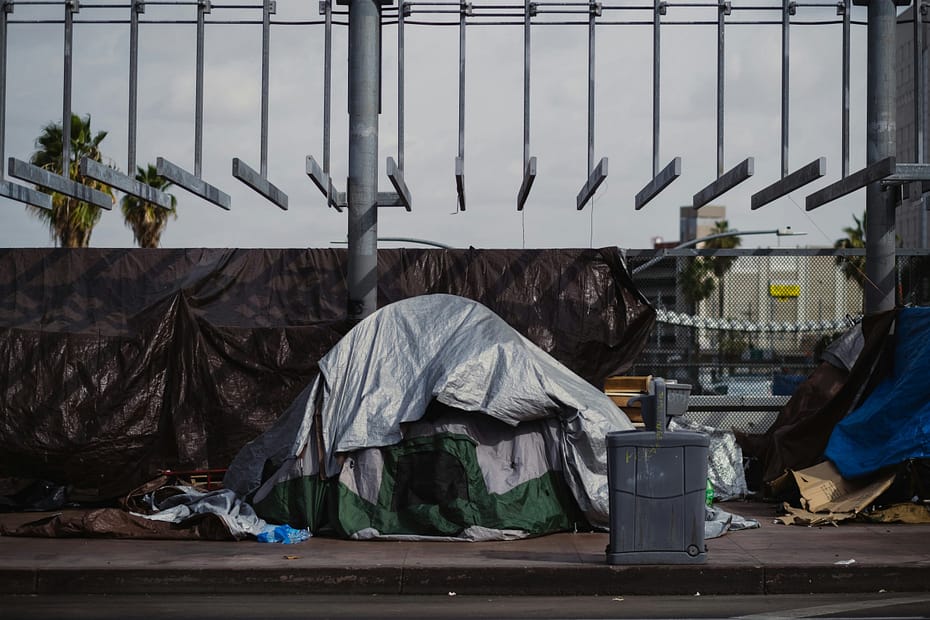
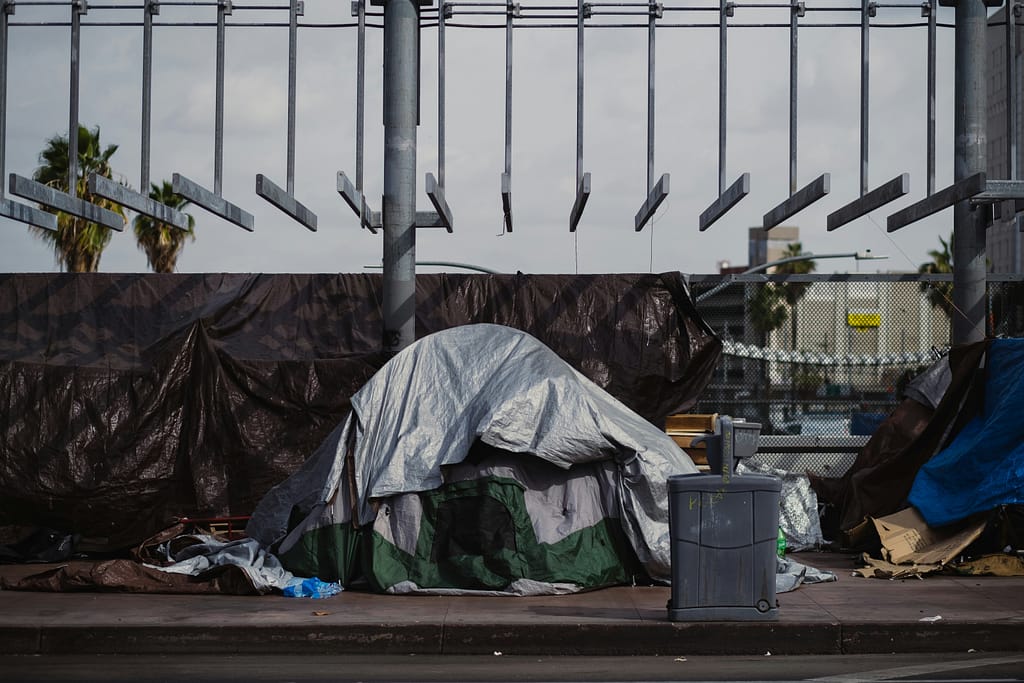
Men sat on curbs drinking cheap wine, sprawled out on sidewalks covered with newspaper, asleep, sick, or dead. They lived on the streets and crashed in flops on piss-soaked mattresses for twenty-five cents a night. Women hid in shadows, turned tricks for a meal or dope; some had a man.
This was Skid Row, Los Angeles—a harbor of the poor, the sick, and those marginalized by the greater society. Outcasts.
Buildings stood silent, like old memories, undisturbed. A police car zoomed by. The only traffic—police, ambulance, and those who serviced the few remaining businesses: liquor stores, pawnshops, laundromats. And us:
The Los Angeles County Health Department.
I was a senior medical social worker, twenty-nine, with an ex-wife, a master’s degree, long hair and a fringed suede jacket. I turned into a balding gravel lot behind a gray, windowless building, and parked.
Lenny, a tall, lanky young Black man with bipolar disorder and tuberculosis, rushed over. He pointed at his throat, making guttural sounds, the hospital band still fresh on his wrist. A shard of glass from a broken bottle someone slashed across his throat was still stuck there. They’d missed it.
Inside the clinic, a nurse examined his throat and called the ambulance. We sent him back to LA General Hospital with a note: “Remove all the glass.” Assholes.
The clinic was a thrown-together room with a faded linoleum floor, bridge chairs, and a coffee pot. Two aluminum tables made up the nurses’ station; the charts kept in cardboard boxes, carried to and from the main building. The doctor’s office, one chair, a lamp and a desk, was in the back.
I handed out bus tokens—an incentive to keep the men showing up and taking medication. No one rode the bus. They cashed them in at the corner liquor store for wine and cigarettes.
Outside, a large van idled across the street. Men in uniform loaded three handcuffed derelicts into the back and slammed the doors. Police—“To Protect and Serve” stenciled on the side.
I was sipping coffee when a man in need of a shave and a haircut approached me. He pulled a faded color photo from his wallet, thin from wear.
“I used to live there,” he said. “That’s my wife and son.”
I studied the photo. A young woman stood in front of a stucco home; in the background were flowers. She was smiling.
“Nice place. Pretty lady.” I said. An acknowledgement—a validation that you are not a failure as a human being. He returned the confirmation of his manhood to his wallet, poured a cup of coffee, and waited to see the doctor.
Musicians, laborers, men of all races, faiths, and abilities, struck by fate. I thought to myself, there, but for the grace of God go I.
An upright piano of unknown origin sat against a wall. The bridal straps were broken, some sticking keys, and out of tune. The funds we needed to restore it were out of reach and it sat there until one of the nurses volunteered her dad, a piano tuner and repairman. It took him a few weeks and a half dozen trips until it was ready.
Jordan had earned a living playing piano in bars until arthritis swelled his hands. He entertained us with a few tunes when his hands allowed. Others took turns. One day, a man I had never seen walked in. He was a large man, Black, over 6 feet tall, and went directly to the piano.
At the first chord, he had us with his composition of elegance, riffs, improvisation, and genius; Blues at its very finest. Even the doctor came out. Then, he stopped, got up, and walked out to applause. I followed him into the street.
“Who are you?” I asked, hurrying to keep up with him. This was someone famous. I wanted to know his story and help him.
He walked faster. “If I told you my name, you’d know who I was.”
“Please come back!” I hollered. I never saw him again.
A brunette in her twenties, like a rabbit staring at the end of a shotgun, huddled against the wall. I introduced myself. Debi was fresh out of nursing school, her first time at the clinic, and far outside her element from Westwood. She shadowed me as I engaged with the men and introduced her.
“You’ll be safe here,” I assured her. “Just don’t wander off outside alone.”
Judging by her sudden pallor and stiffening, this had the opposite effect.
Safety was an issue. A young man had pulled a knife on me outside the clinic, demanding money. I told him I had the money inside. We went in and the bouncer dealt with him.
Another time, I accepted a man’s handshake. He squeezed my hand with enough force and intent, to break all the bones. He bragged he could shatter my hand. In serious pain and terrified, I agreed he could. Then, he let go and walked out. Yeah, I was never quite at ease.
Dating was a perk. The job wasn’t hard. What was hard was dragging myself out of bed five days a week, sitting on the Santa Monica freeway, stubbing out cigarettes, shifting gears, and listening to helicopter radio broadcasts, “Sig Alerts.”
“We have an accident on the Harbor Freeway northbound, a vehicle on the side. Right lanes blocked eastbound on the Santa Monica Freeway at the Figueroa exit.”
My exit. Damn it!
I take the next off-ramp, backtrack, go the wrong way on a one-way street, and finally park in the County garage.
Eloy walked into my office slightly after 8 A.M. A Black man in his late forties, with chronic brain syndrome from years of alcoholism. He’d been sober for years now.
Shortly after we met, the police jailed him for drunk and released him without his eyeglasses. He came to me because he couldn’t see much without them and had no funds to replace them.
“Why would they take away a man’s pair of eyeglasses?” he asked me.
I called to inquire. The officer explained, “One of those things.”
“Of course. I understand. Do we need to post a public plea in the Los Angeles Times to start an eyeglass fund for those arrested?”
They returned his glasses that afternoon and stopped arresting him.
“What’s up, Eloy? I’m in a piss-poor mood.”
“Hey, man, it’s a good thing I dropped on by.”
He pulled up a chair, sat down, and made himself at home.
Shelly, a nurse from the third floor, knocked. The door was open. She poked her head in, all smiles. “Sorry to interrupt. We’re giving a retirement party for Susan this Friday—35 years with the County. Hope to see you there.”
“Sure.”
Eloy continued.
“See, what happened, I woke up early this morning. They fixed up a big breakfast at that boarding home you got me, and I sure do appreciate you doin’ that for me. So, after breakfast, I felt like goin’ for a walk and it bein’ such a beautiful day, and I’m feelin’ so good, so happy, did you notice what a beautiful day it is? I went into the kitchen and got me a bunch of old bread and went to the park and fed the ducks. Then I just kept walkin’ and find myself here on Figueroa Street, next to your office.”
We sat silent. I sipped my coffee.
“…I just come up to share this beautiful mornin’ with you. I don’t want nothin’.”
I thanked him.
There he was, with chronic brain syndrome, on disability, living in a flop, feeding the ducks. I wanted to feed the ducks, to wake up without an alarm, and to have more time for myself than I gave to work.
I was dying, my skin yellowing like the walls, the days and weeks eating up my life, mortgaging it for a paycheck.
One rainy day, huddled around the coffee pot in the Skid Row clinic, maybe twenty men and a few women, we chatted, when someone said to me, “You got it made. You have a sports car, a place on the beach…”
I considered. “You have all the time in the world to do as you please. You ride the rails anywhere you want. Chicago, New York, Florida…”
“It takes money,” an older man rebutted, “to do as we please. And we ain’t got money.”
“You pay for money with time,” I defended. “When do you enjoy it?”
Everyone chimed in.
“I’ll sacrifice time for a place on the beach!”
The man with the photo spoke up, “I had a home and family.”
I broke in: “What gives life meaning?”
Not that we were lazy, not at all. The conversation focused on the quality of life, imbalance, the hamster wheel that went nowhere, or as my mother said, “Schlemiel, he worked forty years and died.” And for what?
We were all limited by finances, health, or time, and by the fear of breaking loose from the work-a-day routine. Our passions diverted into passive resignation.
What we wanted was happiness, and the freedom to have it. How could we enjoy a family if we were always working? I was grateful, yes, and also aware that what I had came in slices, like the ends of bread. The loaf went to the job.
The doctor called a patient. The nurse checked blood pressure, did vitals.
I handed out bus tokens flooded with memories of a marriage and home destroyed by my selfishness and anger. I grieved the loss. Would I carry a faded picture in my wallet someday?
Three hours after Eloy left, I submitted my resignation. I told my supervisor, “I want to feed the ducks and write.”
I sold my few possessions, gave notice to my landlord, and bought a used Dodge van. With a typewriter, a bottle of scotch, and some clothes, I headed out across the United States.

Marty B. Rivers
Marty writes from an old farmhouse in the hills of Tennessee. A solitary figure, hunched over a sticky keyboard, inspired by moonshine and nightly hauntings. He has two adult children and one cat. Marty's work has been published in BarBar, Backwards Trajectory, Heavy Feather Review, and Four Tulips, among others.
A great story unmistakenly too real. We can all resonate with someone in this story. Google’s a statue. The homeless Jesus. That about says it all. He had nowhere to hang his head like so many. I have compassion for those who have no hope. No faith and nothing left. However, we are all worth the same amount in God’s eyes.